Newsletter 002 (Q3/2023)
Conner Automation Business News
The second newsletter for Conner Automation Inc is finally ready! It is my goal to publish these quarterly. Times have been busy, so I hope to be able to keep this up. Please feel free to email at the address found on the “Contact” page for any suggestions for future topics or if you would like additional information on anything presented previously.
Conner Automation is happy to announce that we have secured office space in the Westlake area! This workspace will minimize any distractions and interruptions that have become typical in the work-from-home era. My cat may not appreciate me no longer being home every day, but it is important to be able to focus during working hours. We also have access to meeting rooms and a lobby area for visiting clients.

Note that Conner Automation, Inc has no sponsorships at this time, and anything in the Newsletter is not a paid review of products or services. The Newsletter is really just an opportunity to inform potential clients around a variety of topics of interest, and does not represent sales or advertising material.
Trending
The Gig Economy
Perhaps you’ve heard of it – the so-called “gig economy”. What exactly is it, and does it matter for process automation professionals? Simply stated, Gig Economy is really just another name for the old-fashioned contracting and consulting business. The term came into fashion around the time of Uber’s uprising, as people started to realize they could turn their cars and spare time into cash by driving strangers around town. This is something anyone with a driver’s license and a car could do. But Gig Economy is much larger than just rideshare; it can encompass all sorts of professional work as well.
Does it matter for automation professionals? Of course! While most companies tend to have a staff of in-house automation and control systems engineers, there are always cycles of workload which require staff augmentation. It is exactly this ebb and flow that contract services and staff augmentation companies look to for business. Conner Automation Inc is in the business of helping clients be successful in implementation of process automation for new facilities as well as support of existing facilities. These activities fit well into the definition of Gig Economy. Other activities within the consulting domain fit the definition as well, whether it be an educational course offering, an audit of best practices, or development of a strategy for some domain of your business. We look forward to helping our clients in any and all of these ways as we grow as a company!
Main Focus
AWS IoT Core
The Internet of Things (IoT) has not yet made a large impact in the process automation fields. One shortfall is that there are not many well-known solutions for gathering data from IoT devices into our process control systems. Accordingly, there are many types of devices that can be considered IoT, with communications technologies spanning cellular, LoRaN, and many others. To gather these data, we need a platform. I’d like to talk a bit about the Amazon Web Services (AWS) IoT Core as a platform. In the era of the Internet of Things (IoT), connectivity is at the heart of innovation and efficiency. Amazon Web Services (AWS) IoT Core has emerged as a leading platform for managing and connecting fleets of IoT devices securely.
The Internet of Things (IoT) presents unprecedented opportunities for businesses and individuals alike, enabling seamless connectivity between devices and unlocking a world of automation and data-driven insights. In industrial settings, IoT plays a critical role in connecting a vast array of sensors, machines, and equipment. This facilitates real-time monitoring, predictive maintenance, and optimization of industrial processes. Amazon Web Services (AWS) IoT Core is a platform service designed to simplify the integration and management of IoT devices and applications. Through AWS IoT Core, you can configure, secure, and manage data from devices numbering from one to billions. AWS IoT Core offers comprehensive device management functionalities, including device onboarding, provisioning, and secure communication. The platform supports various protocols and offers device shadowing, allowing for real-time synchronization between devices and the cloud.
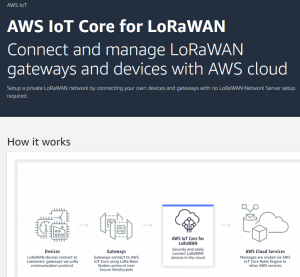
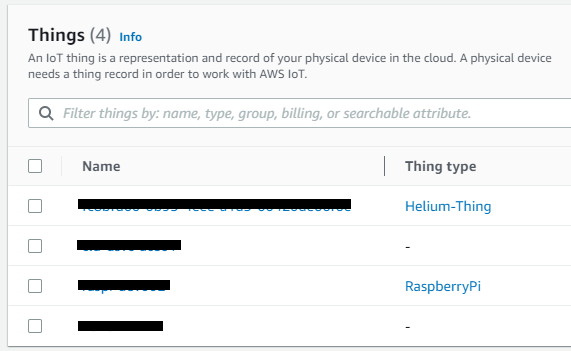
AWS IoT Core provides a device registry to manage device metadata, allowing users to organize and track their connected devices efficiently. This feature is particularly useful when dealing with a large fleet of devices. To start, the end user can define classes, or “Thing Types” in order to easily onboard devices. Figure 1 shows a couple of configured “Thing Types” for a device using the Helium Network, and one for a simple Raspberry PI communicating over WiFi. If you are unfamiliar with the Helium Network, it utilizes LoRaN communications to various gateway nodes which then re-broadcast over the internet. AWS IoT Core also supports private LoRaWAN setups (Figure 2). Note that IoT devices do not have to use exotic communication protocols, or be located in far-off locations. Thing Types are optional, but help in configuration of large numbers of similar devices. As new Things are added, they can be seen on the Thing Management interface (Figure 3). For now, these are essentially placeholders for your devices. To connect, we next need to talk about Security.

Security is a top priority in IoT deployments, and AWS IoT Core excels in this aspect. It provides end-to-end encryption, device authentication, and access control policies, ensuring secure and private communication between devices and the cloud. Additionally, AWS IoT Core integrates with other AWS services like AWS Identity and Access Management (IAM) for enhanced security. In order for a device to integrate with AWS IoT Core, you need to define an end point for the communications. It allows developers to choose the most suitable protocol for their use case, including MQTT, HTTP, and WebSockets. As can be seen in Figure 4, AWS IoT Core has you covered if you are developing on Windows or Linux, and provides SDK options for Node.js, Python, and Java. If you are working with a vendor-supplied device, you will need to research the communications options, and create a security certificate to load onto the device in order to provide secure communications to the AWS platform. There is a convenient interface for management of security certificates (Figure 5).


Once devices are onboarded and communicating, the entire ecosystem of AWS services is at your disposal. As part of the AWS suite of services, AWS IoT Core seamlessly integrates with other AWS services, such as AWS Lambda, Amazon S3, Amazon Kinesis, and Amazon SageMaker, providing a comprehensive platform for IoT application development, data processing, and machine learning. Messages are logged as MQTT topics, which can then be filtered by writing some simple SQL statements. The SQL statements are called “Rules” that parse the messages and send data packets to other services. The rules engine in AWS IoT Core enables data transformation and routing based on predefined rules. It allows users to filter, process, and

forward device-generated data to other AWS services, enabling real-time analytics, storage, and actions based on the data.A rule to select any message presenting on a specific MQTT topic could be as simple as “SELECT * from ‘<topic name>’”. A more complex statement to send certain parts of a message to the downstream AWS service is shown in Figure 6. In this example, the device_id, message, and metadata about Helium Network hotspot through which the message was sent is all packaged up to be sent to the SNS service. SNS will then send that data as a text message to a defined endpoint. You could also use a different service, such as AWS Lambda to serve as the endpoint for the data, with further processing into a database, program, or script of your design (Figure 7). In the process automation world, this is where we need robust connectors into process automation systems or MES platforms.
I hope to inspire others to visualize the potential of a platform such as AWS IoT Core, as it relates to process automation. Amazon Web Services IoT Core is a robust and reliable platform that simplifies the management and connectivity of IoT devices, providing businesses and individuals with the tools needed to unlock the full potential of the Internet of Things. With support for multiple messaging protocols and device SDKs, AWS IoT Core offers flexibility in device connectivity and integration. Note that the AWS stack can be hosted on a virtual private cloud (VPC), further enhancing security and administrative control, should that still be a concern. I would really like to see more such applications come to fruition in the near future, with supported integrations across platforms such as RSLogix, DeltaV, and Siemens.
SideNotes
Need a Quick Computer – EC2 to the Rescue!
I recently had the need to do some basic web development, as well as spreadsheet creations and reviews for a couple of applications. Unfortunately, my computer was not functional, and I did not have the time to run out and purchase a new one right away. I have extensive experience on the AWS platform for personal and professional development activities, so it was an easy matter to spin up an EC2 instance suited to the development activities I had in mind.
Today, you can create compute power using virtual machines in just a couple of minutes! The variety of options at your disposal covers almost anything you may need if you are working with software systems. The exception is, of course, if you need direct hardware connection to the machine. Perhaps there are solutions for this with IP-addressed USB devices, but I have not researched it yet.
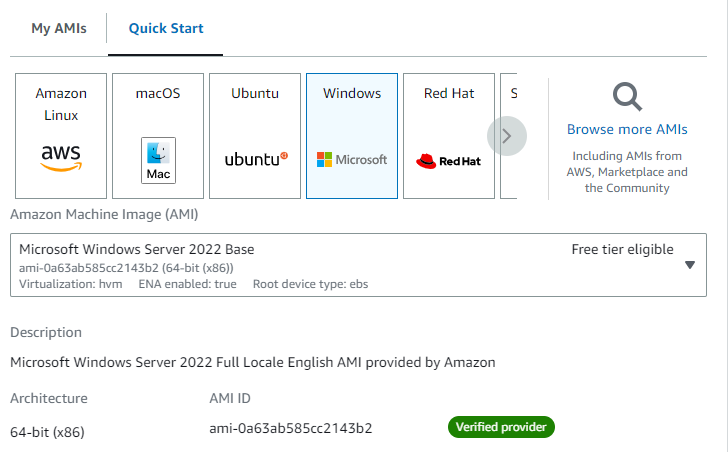
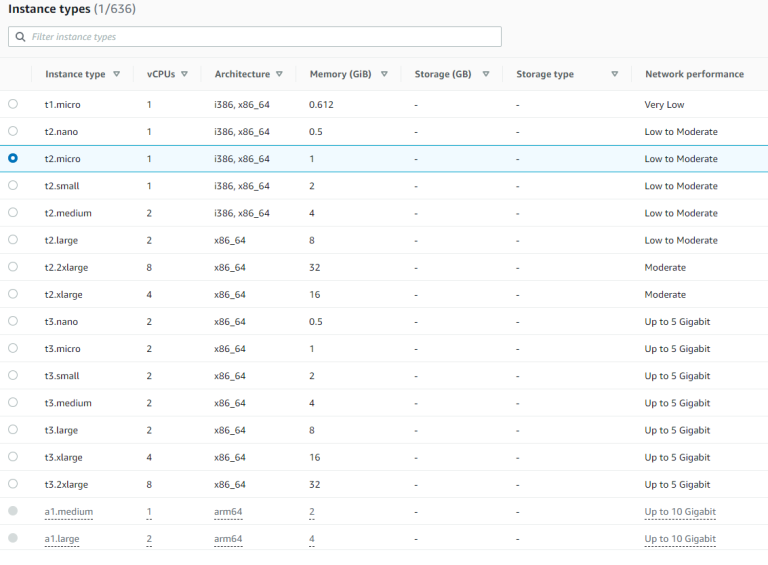
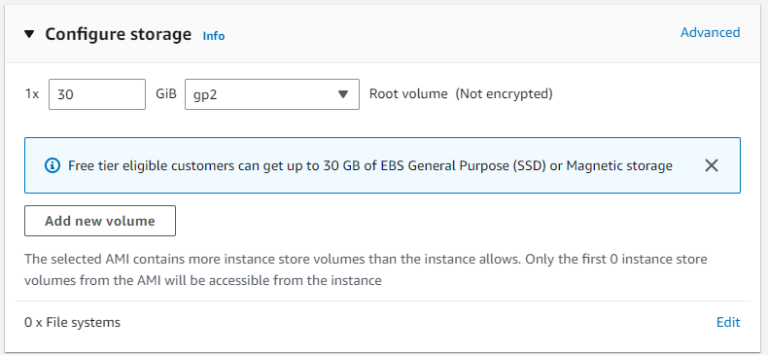
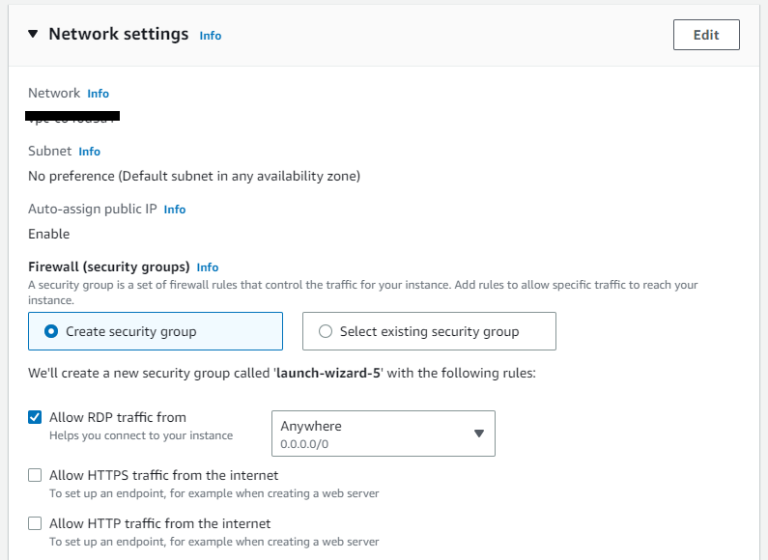
The process for creating an EC2 virtual machine on the AWS platform starts with selection of the operating system and machine size. Linux, Windows, macOS, and other operating systems are supported, as shown in Figures 8 and 9. The simplest options involve choosing an Amazon Machine Image (AMI), which is a pre-built template. The instances are charged by the hour, and rates can be viewed before creation. If you are only using the machine intermittently, it is a very cost effective option in the short term. Next, you choose how much storage you would like to apply, as shown in Figure 10. Again, additional costs apply for excess storage allocations. Finally, you set your security options (Figure 11). You can open security to enable login to your EC2 instance from anywhere in the world, but I find it a better practice to restrict it to my current IP address. Security configuration is flexible, based on Security Groups in AWS. That’s it, let the computer start, and in a few seconds you can login to your brand new OS installation and get to work! I continue to be amazed at how simple the process is when you need computer power fast!